
HCPF states that people who qualify through a Health First Colorado pregnancy program remain covered through pregnancy and for 12 months after the pregnancy ends, subject to the program's eligibility rules.
Start with the member's exact coverage program
A pregnant or postpartum member may be enrolled through the regular Health First Colorado pregnancy pathway, standard child coverage, Cover All Coloradans, CHP+, or another program. The name on a dental office's intake form is not enough to identify the applicable benefit; confirm active enrollment and the dental program for the planned date of service.
HCPF says qualifying pregnancy coverage continues through the pregnancy and for 12 months after it ends. Your dental team can help review the procedures available under your program. Network, age, frequency, clinical criteria, documentation, prior authorization, and any program-specific annual limit still apply.
- Check the official eligibility record rather than relying on an old card or a prior visit.
- Tell DentaQuest and the dental office whether the member is pregnant or within the postpartum period when that fact affects enrollment or care planning.
- Ask which benefit summary the office is using: adult, standard child, Cover All Coloradans, or CHP+.
- Recheck eligibility if treatment is scheduled after a birth, pregnancy loss, enrollment renewal, or other coverage change.
Pregnancy does not produce one annual-limit rule
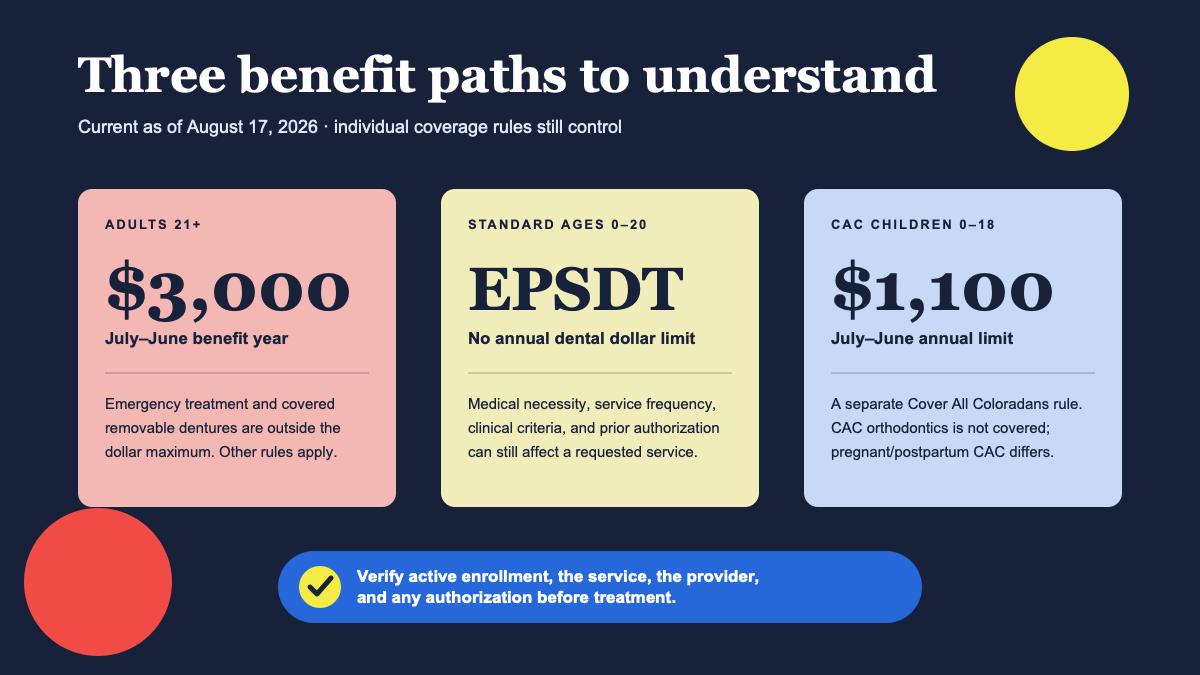
For standard Health First Colorado adults age 21 and over, DentaQuest's 2026 benefit-limit change notice and current member page establish a $3,000 dental limit for the July 1–June 30 benefit year. Those sources exclude qualifying emergency treatment and dentures from that adult limit, while the other benefit rules continue to apply.
Standard Health First Colorado members under 21 generally use the children's benefit and EPSDT rules. Cover All Coloradans is different: its July 2026 notice sets a $1,100 July–June limit for covered children age 0–18 but states that pregnant and postpartum Cover All Coloradans members are not subject to that $1,100 limit. Ask DentaQuest which rule applies to the individual member rather than transferring a rule from one program to another.
What federal oral-health guidance says about dental care
HRSA and CDC advise that regular and emergency dental care can be provided during pregnancy. HRSA says most dental procedures—including examinations, dental X-rays, cleanings, local numbing, fillings, crowns, and root-canal treatment—are generally safe during pregnancy. This is broad public-health guidance, not a decision about a particular person's health or Medicaid coverage.
Tell the dentist how far along the pregnancy is, the expected delivery date, current conditions, allergies, and every prescription, over-the-counter medicine, vitamin, and supplement. HRSA advises dental professionals to consult the prenatal clinician when questions involve intravenous sedation, nitrous oxide, general anesthesia, antibiotics, or pain medicine. The treating clinicians should make the individualized decision.
- Do not stop or start medicine because of a website; contact the prescribing or prenatal clinician.
- Ask why an X-ray is needed and what protective and clinical protocols the office follows.
- Share the prenatal clinician's contact information when coordination may be needed.
- If a clinician advises delaying a procedure, ask how pain, infection risk, and follow-up will be managed in the meantime.
Pregnancy and postpartum dental-visit checklist
- 1
Verify eligibility for the appointment date
Confirm the active program, dental administrator, Dental Home or network office, and any current annual-limit information.
- 2
Describe the dental concern clearly
Report pain, swelling, bleeding, broken teeth, difficulty eating, or another concern without trying to choose the procedure code yourself.
- 3
Bring complete health information
Include pregnancy or postpartum dates, medical conditions, allergies, medicines, supplements, and prenatal-clinician contact details.
- 4
Ask about the proposed plan
Request the diagnosis, treatment options, timing, medication or sedation plan, expected follow-up, and any coordination needed with the prenatal team.
- 5
Verify the benefit before non-emergency care
Ask about the exact service, frequency, remaining annual benefit if one applies, and prior authorization. The office can also check current eligibility and the claim requirements that affect payment.
- 6
Solve transportation early
If transportation is a barrier, review Health First Colorado's NEMT rules before the appointment; eligibility for a ride and coverage of dental care are separate decisions.
Do not wait on urgent symptoms—and recheck coverage after birth
Contact a dental professional promptly for severe or worsening tooth pain, swelling, drainage, trauma, fever with dental symptoms, or bleeding that will not settle. Call 911 or seek emergency medical care for trouble breathing or swallowing, rapidly spreading face or neck swelling, major trauma, confusion, or uncontrolled bleeding. A hospital may stabilize a dangerous condition but may not provide definitive dental treatment, so dental follow-up can still be necessary.
After the pregnancy ends, keep the official end date and contact information current with the eligibility agency. Use the 12-month postpartum period for needed follow-up, but verify coverage before each staged visit. If coverage or a dental service is denied, read the notice immediately because review deadlines and instructions depend on the decision.
Primary sources
Verify the details that affect your care
We use official program materials and clearly identify Star Dental pages. Policies and personal benefit status can change.
- HCPF pregnancy programs and 12-month postpartum coverage
- DentaQuest adult benefit summary — current
- DentaQuest Health First Colorado dental hub
- HCPF Cover All Coloradans
- DentaQuest Cover All Coloradans 2026 notice
- HRSA oral health and pregnancy guidance
- CDC pregnancy and oral-health facts