
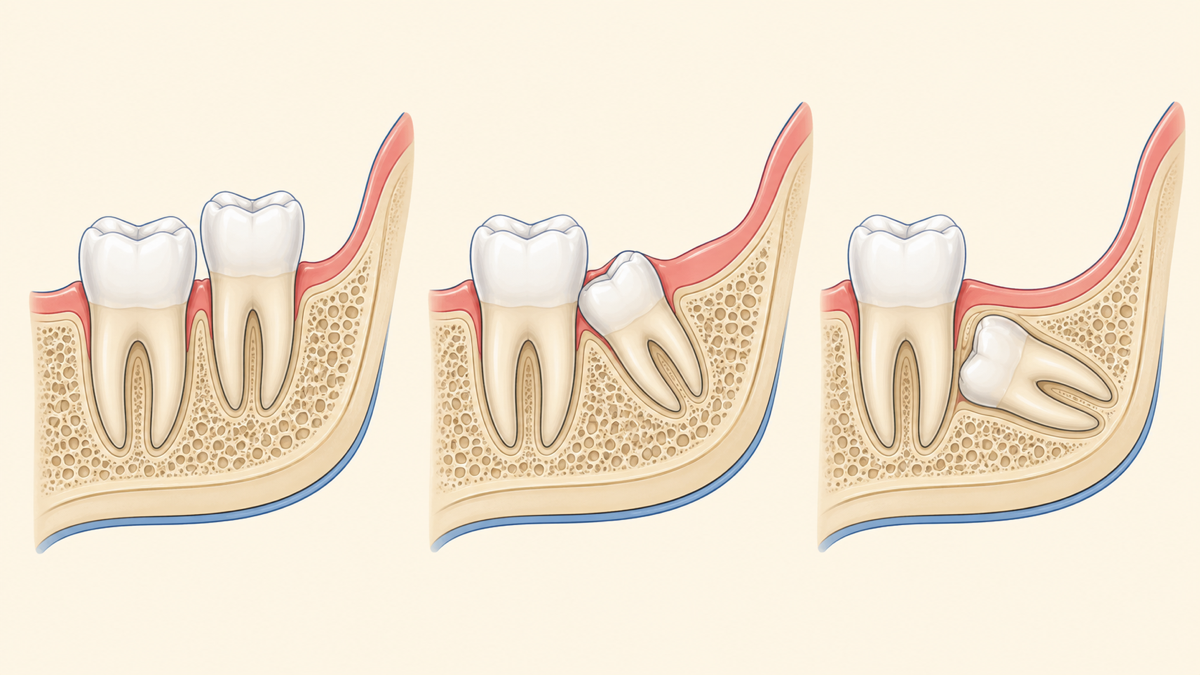
Health First Colorado may cover removal when an exam and X-rays show that a wisdom tooth is causing pain, swelling, infection, or another problem. Coverage is not automatic for every impacted tooth, so the office checks your benefits and treatment plan before care.
Wisdom-tooth removal may be covered when the tooth is causing a problem and the recommended treatment meets current program rules. Being impacted by itself does not confirm coverage.
The quick answer for Colorado Medicaid members
Yes, Health First Colorado may cover wisdom-tooth removal when the tooth is causing pain, swelling, infection, or another clear problem and the recommended care meets your current benefit rules. An examination and appropriate X-rays are needed before a dentist can decide whether removal, monitoring, or another treatment is right for you.
No, coverage is not automatic merely because a wisdom tooth is present, unerupted, or impacted. Routine preventive removal of an asymptomatic wisdom tooth is generally not covered. Your dental office should check your active benefits and the recommended treatment before you schedule the procedure.
Coverage at a glance: children and adults
- 1
Children and young adults ages 0 through 20
Standard Health First Colorado children's dental coverage has no copayment, deductible, or annual dental benefit cap. A medically necessary wisdom-tooth removal may be covered after an examination. A narrow exception for an asymptomatic tooth can apply when removal is part of an approved orthodontic treatment plan.
- 2
Adults age 21 and older
Adult dental benefits currently use a $3,000 July-to-June benefit-year limit. Covered emergency treatment and dentures do not count toward that limit. The office should check how much of the benefit remains and whether X-rays or other records are needed for the planned extraction.
- 3
Other Colorado programs
Cover All Coloradans, Child Health Plan Plus, and certain waiver benefits use different rules. Ask the office to confirm the exact program before relying on the standard child or adult information on this page.
What “medically necessary” means for a wisdom tooth
A wisdom tooth is a third molar. Current Colorado coverage rules focus on pain and other clear symptoms rather than on the word “impacted.” The dentist considers what you feel, what the examination shows, and what the X-ray reveals.
One tooth may need treatment while another can be monitored. The dentist can show you the findings and explain why removal or monitoring is recommended.
- Pain, infection, swelling, drainage, or another clear symptom should be described accurately.
- A bite problem that is moving nearby teeth may matter when the dentist can show it on the examination or X-ray.
- Impaction or lack of room alone does not establish Health First Colorado coverage.
- The dentist—not the benefit guide—decides whether extraction, monitoring, or another treatment is clinically appropriate.
What happens before wisdom-tooth treatment
- 1
Tell the office what is happening
Describe the pain, swelling, bad taste, trouble opening your mouth, or other symptoms, and say whether Health First Colorado is your current coverage.
- 2
Have the tooth examined
The dentist checks the wisdom tooth, nearby teeth, gums, bite, health history, and any signs of infection or another problem.
- 3
Review the right X-ray
A panoramic or other dental image may be needed to see the tooth's position and roots. Bring recent usable X-rays or ask the previous office to transfer them when possible.
- 4
Check the plan and benefits
The office explains whether the tooth can be monitored or should be removed, whether a specialist may be needed, what comfort option is planned, and what Health First Colorado information still needs confirmation.
Sedation and anesthesia are checked separately
Local anesthetic is normally used to numb the area. The office can explain what is included with your planned extraction. IV sedation, deep sedation, general anesthesia, and care in a hospital or surgical facility are separate coverage questions.
Ask the dental office which comfort option is clinically appropriate, whether it is expected to be covered for your age and situation, and whether you need a driver or special preparation. Never fast or change medication unless the treating office gives you instructions for your appointment.
Using a general dentist or oral surgeon
Some wisdom teeth can be treated by a general dentist; others may need an oral surgeon because of their position, roots, health factors, or the planned anesthesia. A referral is not a denial—it is a way to match the case with the appropriate setting.
If a specialist is recommended, confirm that the exact oral surgeon and location accept Health First Colorado and that the planned extraction and anesthesia have been checked before the appointment.
What adults should know about the $3,000 benefit-year limit
For standard adult Health First Colorado members, routine covered dental claims generally count toward the current $3,000 benefit-year limit, which runs July 1 through June 30. Covered emergency treatment and dentures do not count toward that limit under the current member summary.
A painful tooth may feel urgent without automatically being classified as covered emergency treatment. Ask the office to check how the visit and procedure are expected to use the benefit and how much remains before treatment.
When wisdom-tooth symptoms need prompt or emergency care
Call a dental provider promptly for severe or worsening pain, facial or gum swelling, drainage, trauma, or bleeding that will not stop. Call 911 or go to an emergency department for trouble breathing or swallowing, rapidly spreading swelling, major facial trauma, or other life-threatening symptoms.
An emergency department can assess dangerous complications and stabilize an emergency, but definitive dental treatment may still require follow-up with a dental provider.
Wisdom-tooth Medicaid coverage questions
- 1
Does an impacted wisdom tooth automatically qualify?
No. An impacted tooth does not automatically qualify. The dentist and Health First Colorado consider your symptoms, examination, X-rays, and recommended treatment.
- 2
Can Medicaid cover removal of all four wisdom teeth?
Possibly, but each tooth must be diagnosed and supported individually. Coverage for one tooth does not automatically establish coverage for the other three, and the dentist must decide whether one, several, or all teeth should be treated.
- 3
Is prior authorization always required?
No. The office may need to send X-rays or clinical notes, and hospital or surgical-facility anesthesia can require approval before treatment. Ask the office what it has confirmed for your complete plan.
- 4
How long does it take Medicaid to approve wisdom teeth removal?
First ask whether your planned extraction needs approval before treatment. If it does, ask the dental office when the request was submitted, whether any records are still needed, and when to check for an update. The office can check your request and its decision documents. Confirm the decision and your appointment with the office rather than relying on a general waiting-time estimate online.
- 5
Will Medicaid pay for sedation?
It may cover certain sedation or anesthesia with a covered dental service when the code, age, setting, provider, and medical-necessity rules are met. Sedation is a separate coverage question and should be verified before treatment.
- 6
Will I have to pay out of pocket?
Standard covered Health First Colorado dental care generally has no copayment or deductible. Costs can still arise for noncovered services, care from a nonparticipating provider, or when an adult benefit limit applies, so ask the office what it has verified before treatment.
- 7
What if the claim or authorization is denied?
Ask the office and DentaQuest for the exact reason and a copy of the written notice. The notice should explain what information was missing or why the service was not approved and describe any reconsideration or appeal deadline.
- 8
How can I verify an oral surgeon?
Search the official directory and call the exact office. Confirm the surgeon, service location, planned anesthesia, and appointment availability; a referral alone does not confirm coverage.
Primary sources
Verify the details that affect your care
We use official program materials and clearly identify Star Dental pages. Policies and personal benefit status can change.
- DentaQuest adult dental benefit summary
- DentaQuest children's dental benefit summary
- DentaQuest Health First Colorado member page
- Health First Colorado benefits and services